
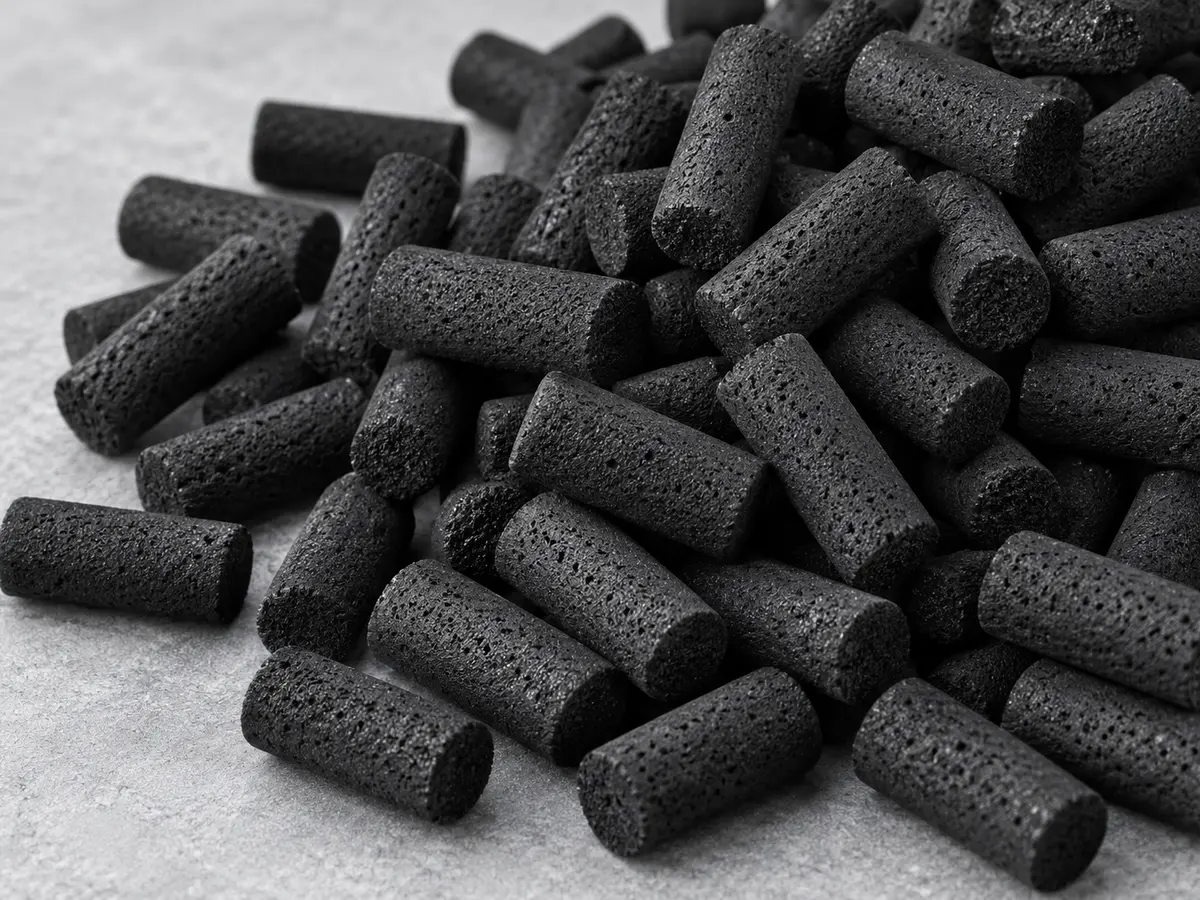
Pelletized Activated Carbon (EAC)
Coal-based, coal-tar-based, wood-based and coconut-shell EAC pellet options for gas-treatment projects.
What Is Pelletized Activated Carbon (EAC)?
Pelletized or extruded activated carbon (EAC) forms cylindrical particles for packed gas-treatment beds. A uniform pellet can help maintain predictable airflow, but diameter, strength and adsorption behavior still need to match the gas stream.
Purchasing Summary
| Buying brief | Provide gas flow, inlet concentration, temperature, humidity, vessel dimensions and allowable pressure drop. Ask for the proposed pellet diameter, strength, dust level and a relevant gas-phase test rather than relying on an unrelated iodine value. |
|---|---|
| Documents and packing | Identify the test report, destination-market requirements, packing and labeling needed for your order. |
| Order details | Confirm sample quantity, bulk quantity, destination and required delivery date. |
For pellet carbon, specify diameter, gas composition, flow and bed dimensions. Add the order quantity, packing format and destination for a complete quotation.
Types of Pelletized Activated Carbon Pellets
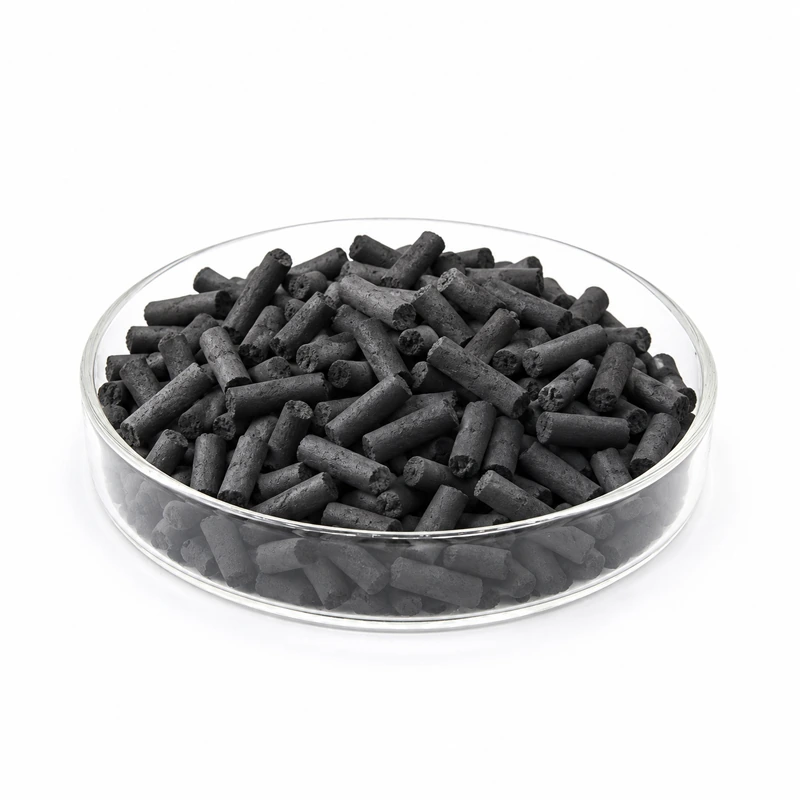
Coal-Based Activated Carbon Pellets
Coal-based extruded carbon for fixed-bed gas adsorption and VOC control studies.
Best for:
- VOC adsorption beds
- Solvent-vapor recovery
- Industrial air filtration
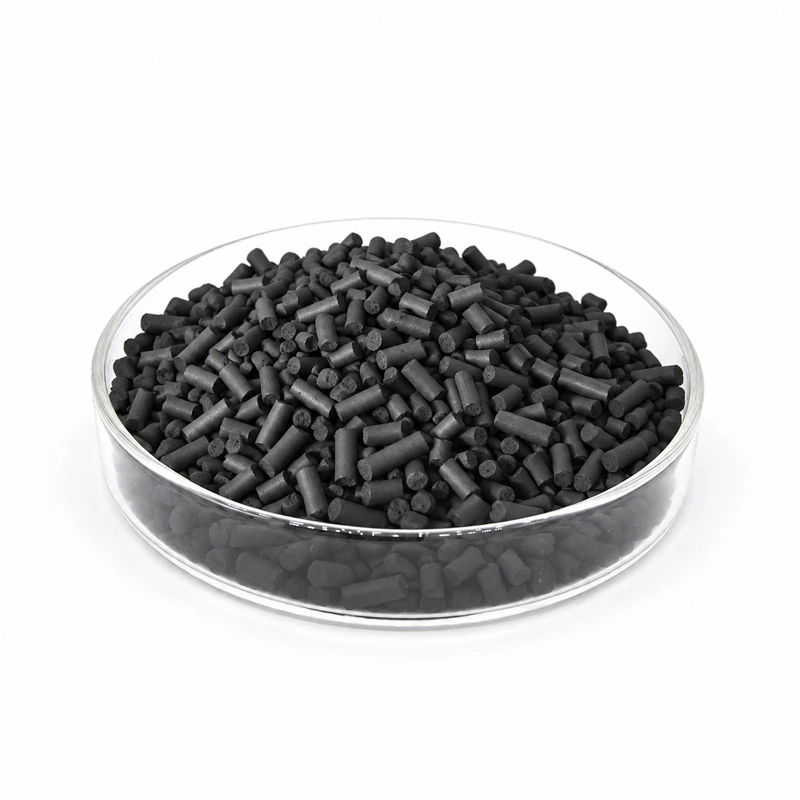
Coal Tar Based Activated Carbon Pellets
A binder-defined pellet option to assess where the formulation is permitted by the application.
Best for:
- Binder-defined procurement
- Gas adsorption comparisons
- Formulation-specific trials
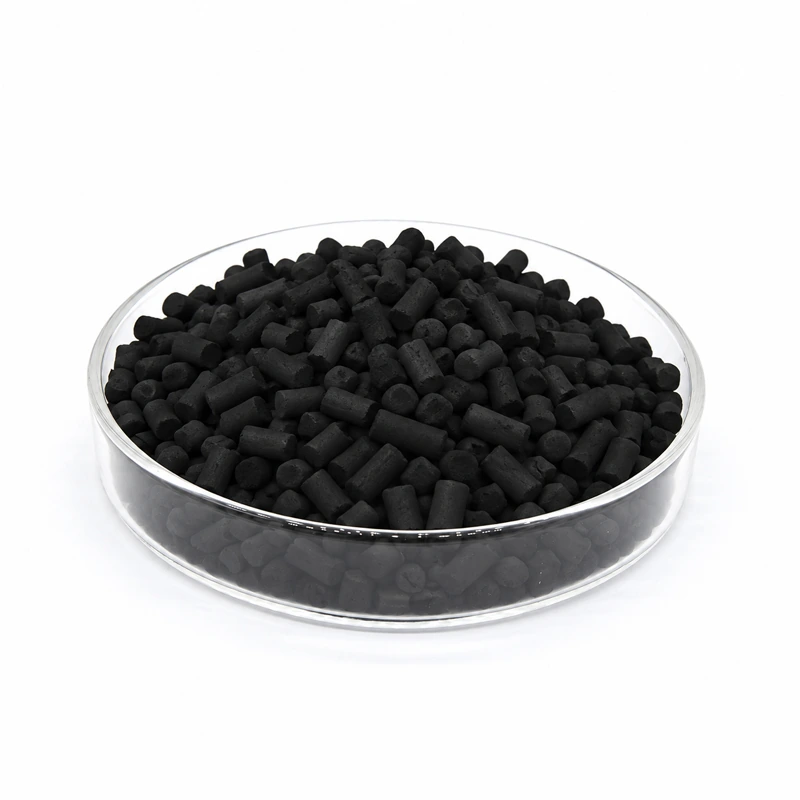
Wood-Based Pellets Activated Carbon
Wood-derived pellets for projects specifying that raw material and a cylindrical form.
Best for:
- Wood-derived media requirements
- Packed gas beds
- Airflow evaluation
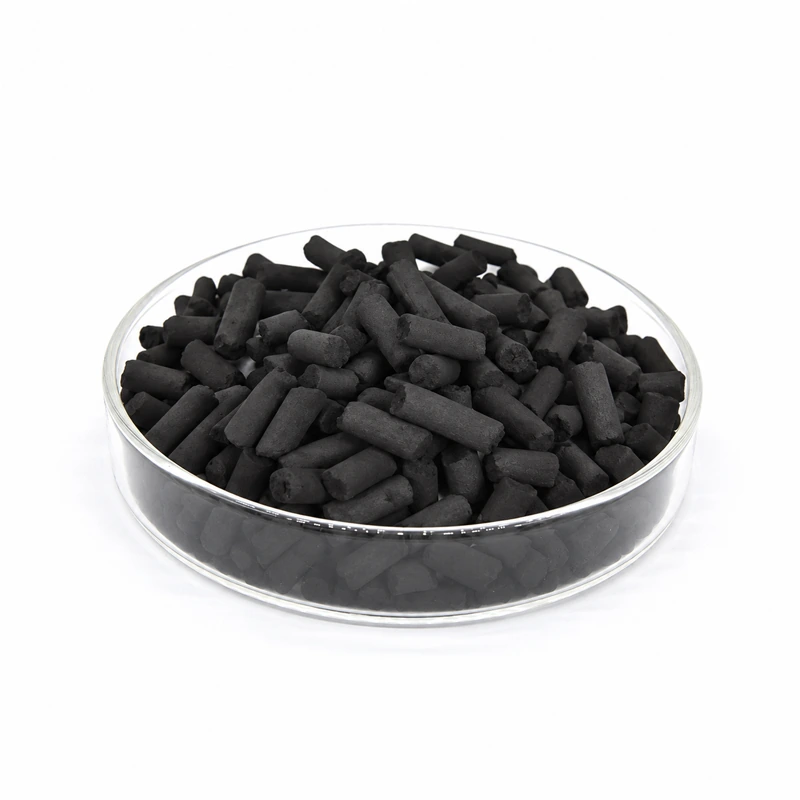
Coconut Shell Pelletized Activated Carbon
Coconut-shell pellets for gas-phase beds that require comparison of size and adsorption grade.
Best for:
- Coconut-shell pellet specifications
- Gas purification trials
- Packed adsorber replacements
Design the gas bed before choosing pellet diameter
Pelletized activated carbon is often compared for ventilation, VOC control and solvent-vapor duties. The cylindrical form can help with consistent packing, but diameter alone does not settle adsorption capacity or bed life. A different feedstock or binder may change the grade, so compare candidates under the same gas mixture, humidity and breakthrough criterion.
For your inquiry: Provide gas flow, inlet concentration, temperature, humidity, vessel dimensions and allowable pressure drop. Ask for the proposed pellet diameter, strength, dust level and a relevant gas-phase test rather than relying on an unrelated iodine value.
If the target requires treated media, start with the chemistry questions on our Impregnated Activated Carbon page.
Grade Selection Checks
| Selection factor | What to review |
|---|---|
| Pellet diameter | Compare airflow and pressure drop in the actual bed |
| Adsorption evidence | Use a gas-phase test relevant to the target vapor |
| Binder and raw material | Confirm formulation restrictions and finished-grade strength |
How to Evaluate Pelletized Activated Carbon (EAC)
Compare candidate pellets using the same vapor mixture, humidity, temperature and flow. Record pressure drop and outlet concentration during the trial, alongside the grade-specific adsorption data, strength and fines content.
Choose a Grade for Your Process
Share gas composition, contaminant concentration, temperature, humidity, flow rate, adsorber dimensions and regeneration plan. These details guide pellet diameter and grade selection.
Assess pellet strength and pressure drop alongside adsorption performance. Humidity and inlet concentration should match the planned gas-treatment conditions.
Pelletized Activated Carbon (EAC) Applications
VOC exhaust and solvent-vapor adsorption
For VOC removal, select pellet dimensions around airflow, bed depth and pressure-drop limits. For solvent recovery, include the solvent mixture and regeneration conditions in the grade review.
Odor and process-gas treatment
Industrial odor or gas polishing may call for standard, catalytic or impregnated media. Temperature, moisture and target chemistry determine whether an untreated pellet is adequate.
Frequently Asked Questions
What does EAC mean?
EAC denotes extruded activated carbon, typically formed as cylindrical pellets. Diameter and length distribution should be specified for the adsorption bed.
Why do gas beds often use carbon pellets?
Uniform pellets provide a predictable packing form and can help manage airflow and fines. Pressure drop still depends on size, bed depth and flow.
Which pellet diameter should I specify?
Use the vessel design, face velocity, contact time and allowable pressure drop. Confirm the proposed size against screens and filling procedures.
Can standard pellets remove every odor gas?
No. Some target gases may require a catalytic or impregnated grade. Identify the gas rather than selecting from a generic odor claim.
Can solvent-recovery pellets be reused?
Recovery and regeneration depend on solvent chemistry, equipment and media stability. Confirm the approved operating and safety procedure for the specific system.
What is required for an EAC inquiry?
Provide vapor composition, concentration, airflow, humidity, temperature, bed dimensions and pellet size. Include regeneration requirements, order quantity, packing and destination. Use our specification checklist to request the relevant TDS, COA and SDS.