
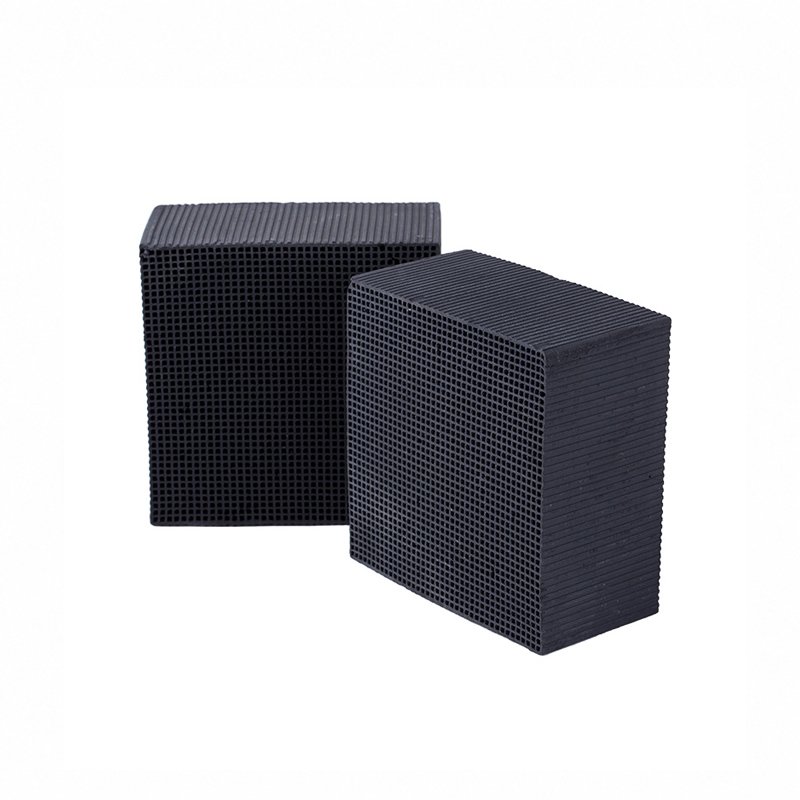
Honeycomb Activated Carbon
Compare standard honeycomb, waterproof honeycomb, customized honeycomb options for your purification process.
What Is Honeycomb Activated Carbon?
Honeycomb activated carbon is molded into blocks with straight channels. It is considered for high-airflow treatment when the system has limited allowable pressure drop, including odor and VOC adsorption duties.
Purchasing Summary
| Buying brief | Provide air volume, inlet contaminants, humidity, operating temperature, block dimensions and replacement plan. Request pressure-drop and adsorption evidence for the offered finished grade. |
|---|---|
| Documents and packing | Identify the test report, destination-market requirements, packing and labeling needed for your order. |
| Order details | Confirm sample quantity, bulk quantity, destination and required delivery date. |
For honeycomb carbon, send block dimensions, channel requirements, housing layout and airflow. State the number of blocks needed and delivery destination.
Honeycomb Activated Carbon Types
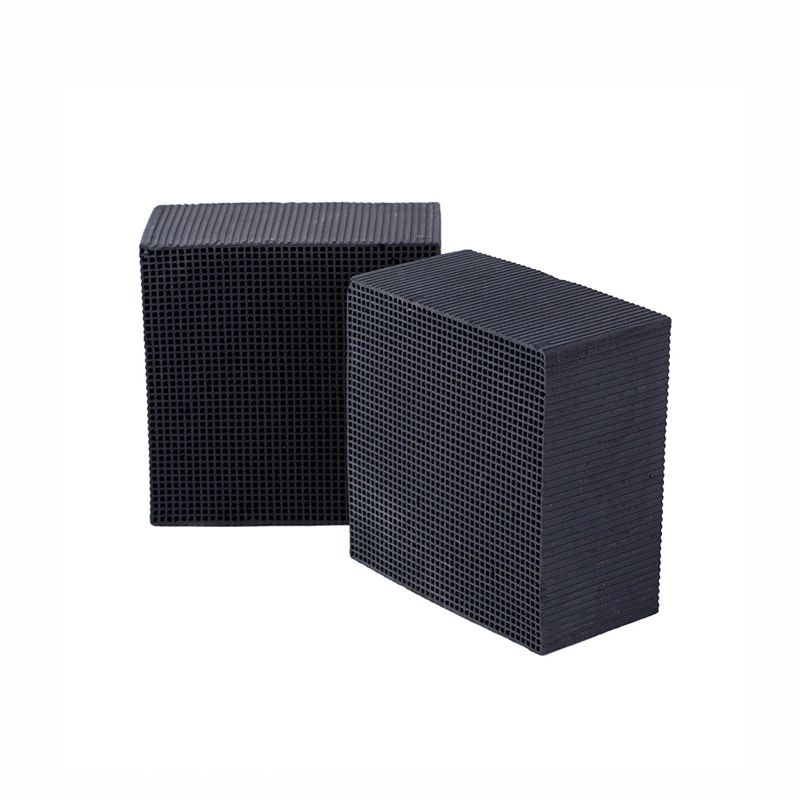
Standard Honeycomb Activated Carbon
A standard block to evaluate for suitable dry-air exhaust and odor-control systems.
Best for:
- Dry exhaust streams
- Odor-control housings
- Ventilation adsorption trials
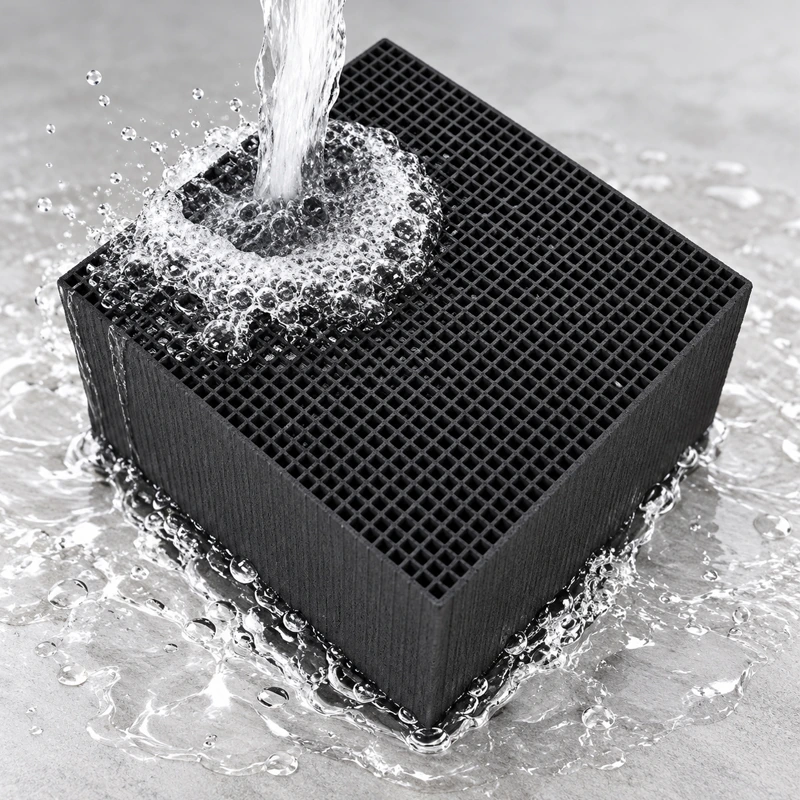
Waterproof Honeycomb Activated Carbon
A water-resistant grade to discuss where moisture exposure is a design concern.
Best for:
- Humid exhaust evaluation
- Moisture-exposure trials
- Water-resistant block specifications
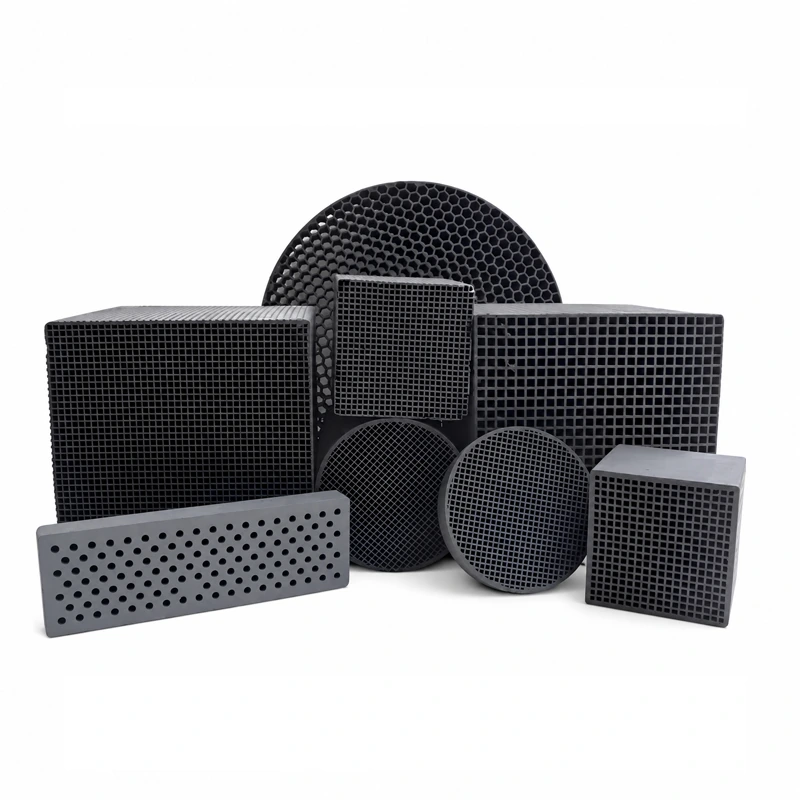
Customized Honeycomb Activated Carbon
Dimensions and cell structure can be discussed against the adsorber housing and process brief.
Best for:
- Existing housing replacements
- Specified block dimensions
- Custom channel and airflow requirements
Standard, water-resistant or sized to order?
The straight channels of a honeycomb block can be useful where an air-treatment system has a defined housing and limited pressure-drop allowance. A standard block should be assessed for the real exhaust composition; a water-resistant option warrants separate checks under humid conditions. Customized dimensions must match the frame and airflow path, not just the outer measurement.
For your inquiry: Provide air volume, inlet contaminants, humidity, operating temperature, block dimensions and replacement plan. Request pressure-drop and adsorption evidence for the offered finished grade.
If the housing uses loose media, compare its flow requirements with our Pelletized Activated Carbon (EAC) page.
Grade Selection Checks
| Selection factor | What to review |
|---|---|
| Block dimensions | Fit the frame, seals and airflow path |
| Channel geometry | Compare resistance at the design airflow |
| Humidity | Assess the offered grade under operating moisture conditions |
How to Evaluate Honeycomb Activated Carbon
A honeycomb specification must consider channel geometry, dimensions, humidity and the actual gas mixture. A standard block and a water-resistant option should not be treated as interchangeable without checking the operating environment.
Choose a Grade for Your Process
Send the air volume, pollutant profile, humidity, housing size and replacement cycle. We can discuss a matching block design and grade-specific data.
Check block dimensions and fit before loading. Compare pressure drop and adsorption performance at the intended airflow and humidity.
Honeycomb Activated Carbon Applications
Industrial exhaust and odor control
Honeycomb activated carbon is used in housings that require a regular airflow path through block media. Typical evaluation projects include coating exhaust, printing vapors and factory ventilation with identified organic odors.
Match block depth and channel geometry to airflow and available contact time. Pre-treatment, humidity and contaminant loading determine whether a standard or moisture-resistant grade should be trialled. Monitor the outlet to establish a practical replacement schedule.
For VOC adsorption, confirm the individual compounds and operating temperature rather than selecting on block dimensions alone.
Frequently Asked Questions
Where is honeycomb activated carbon used?
Honeycomb blocks are evaluated in industrial exhaust and odor-control housings. Identify the vapor mixture, concentration and airflow before choosing a block grade.
Does the honeycomb shape reduce pressure drop?
Open channels provide a defined airflow path. Actual resistance depends on channel dimensions, block depth, face velocity and the complete housing arrangement.
When should I specify waterproof honeycomb carbon?
Consider a moisture-resistant grade where the air stream or handling conditions expose blocks to humidity. Confirm the grade’s moisture tolerance; the name does not mean unlimited immersion resistance.
Can block size and channels be customized?
Send housing drawings, required block dimensions, channel specification and replacement layout. Confirm tolerances and fit on samples before a bulk order.
How often should honeycomb blocks be replaced?
Use outlet monitoring and breakthrough criteria. Vapor loading, humidity, temperature and operating hours affect replacement intervals; there is no single service life for every installation.
What information is needed for a honeycomb carbon inquiry?
Provide the target compounds, airflow, inlet concentration, temperature, humidity, housing dimensions and quantity. Ask for test data for the actual proposed grade.