
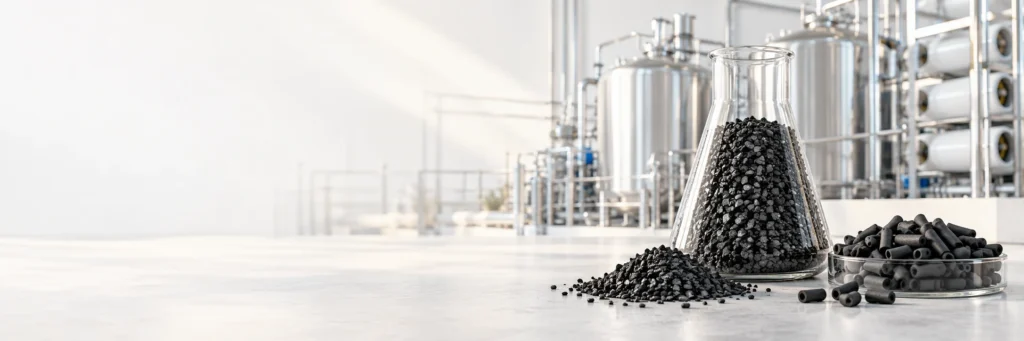
คาร์บอนแอคทีฟแบบเม็ด (GAC)
Coconut shell, coal-based and fruit shell granular activated carbon for water filtration and industrial adsorption beds. Compare particle size, adsorption performance and mechanical strength for your process.
Types of Granular Activated Carbon
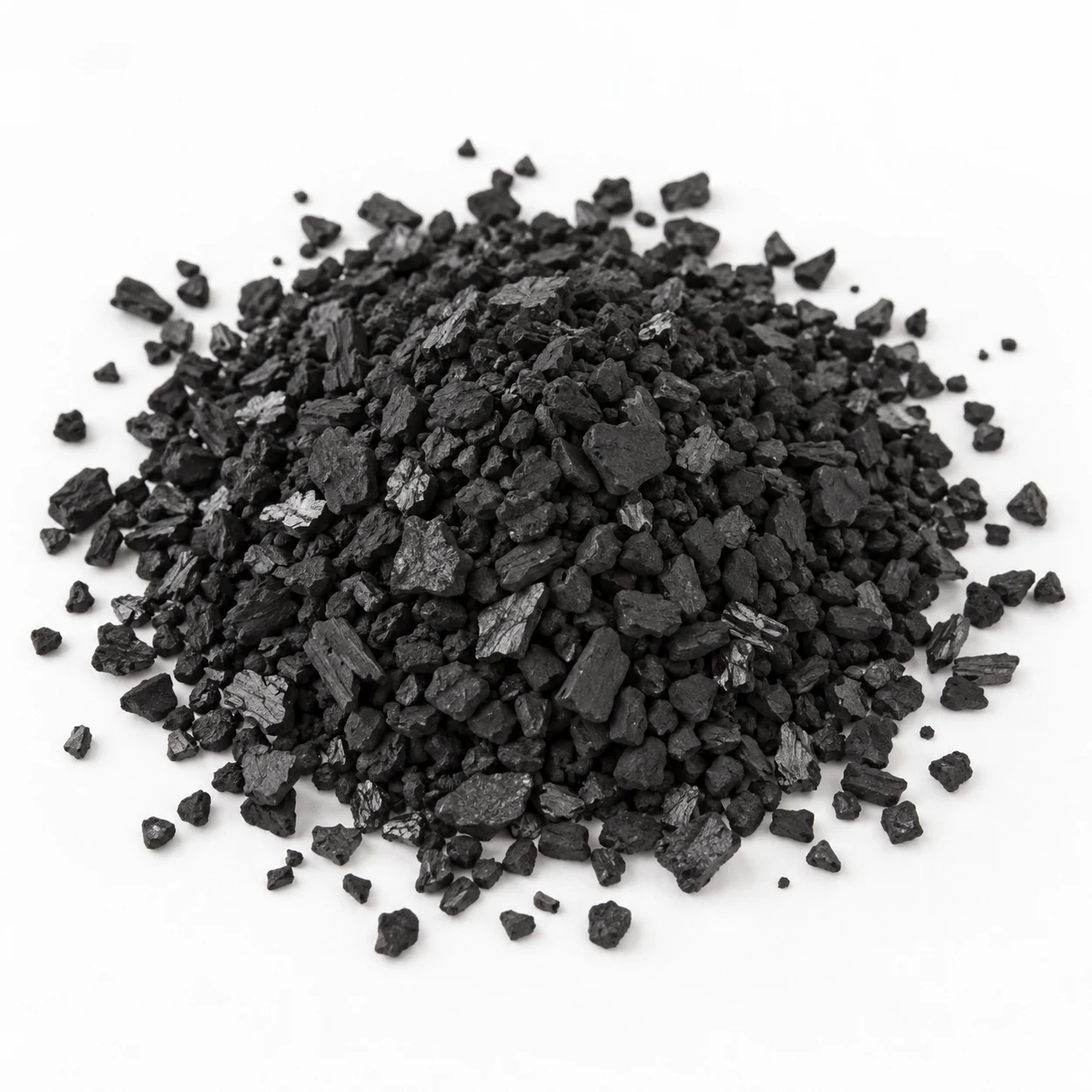
Coconut Shell Granular Activated Carbon
View details
For fixed-bed applications where coconut-shell raw material and granular size are specified.
Best for:
- Fixed-bed water filtration
- Coconut-shell media specifications
- Grade-specific adsorption trials
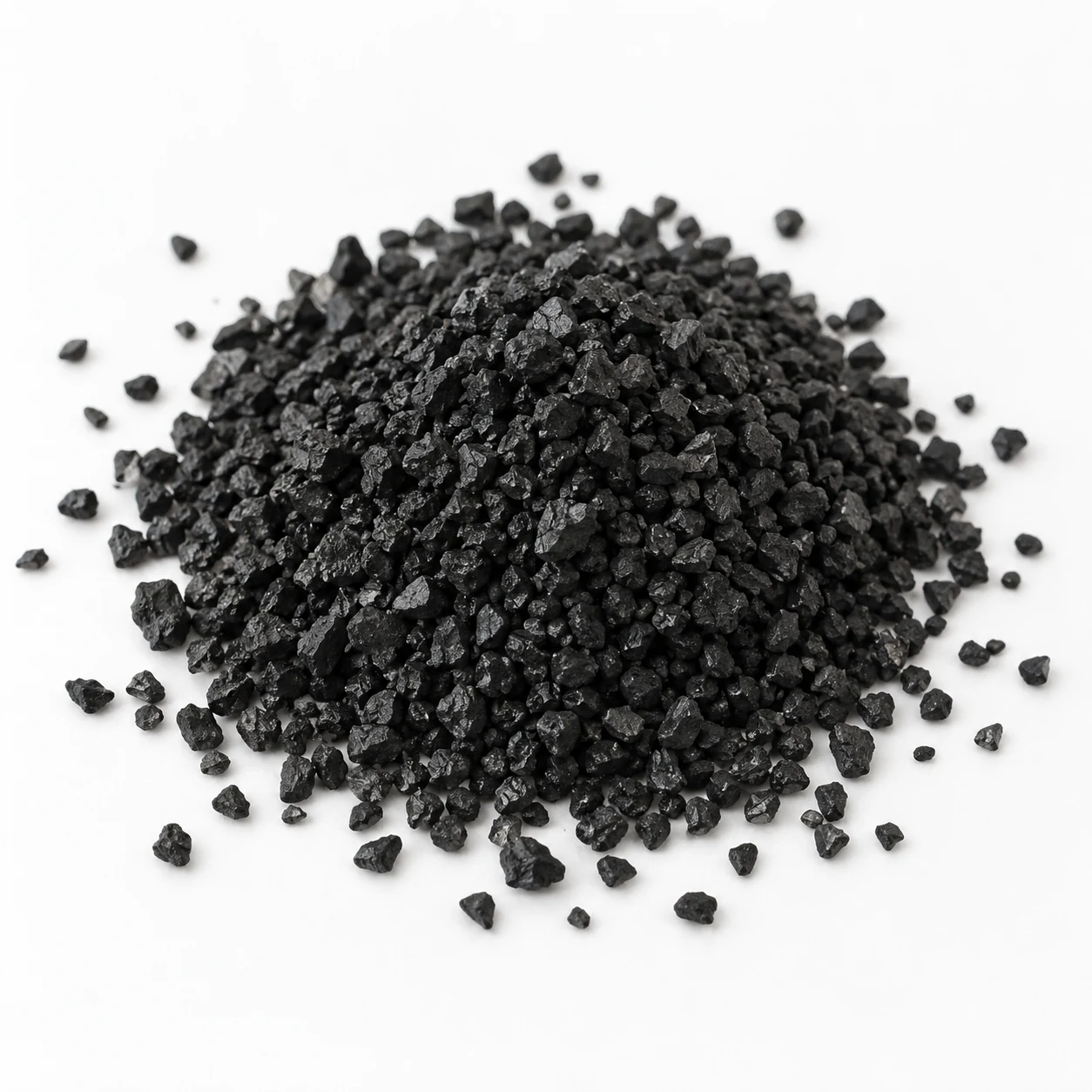
Coal-Based Granular Activated Carbon
View details
A coal-derived GAC option for water and industrial filtration with grade-dependent pore and strength properties.
Best for:
- Industrial water filtration
- Wastewater polishing trials
- Gas purification beds
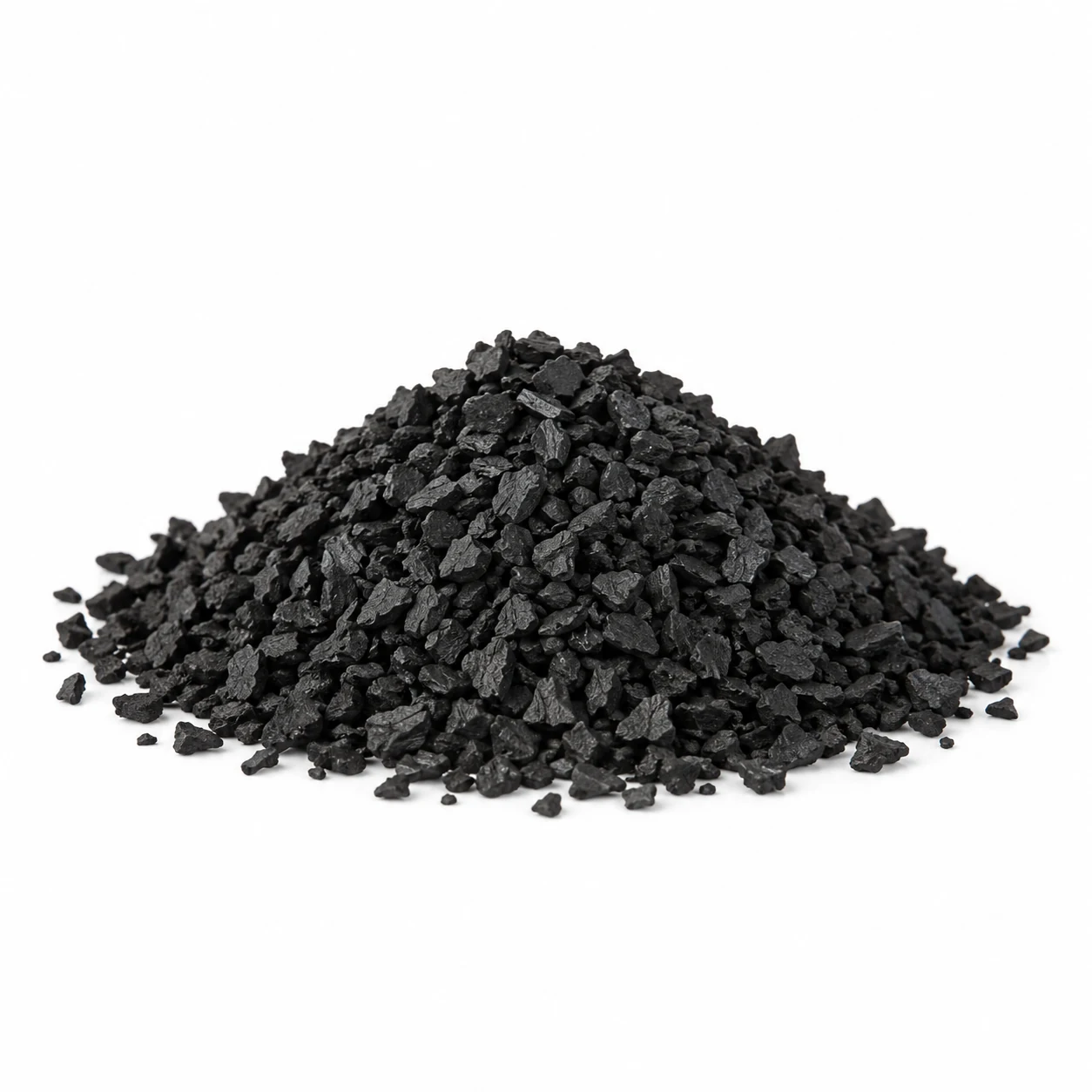
Fruit Shell Granular Activated Carbon
View details
Fruit-shell GAC for buyers comparing raw material, abrasion behavior and adsorption results.
Best for:
- Fruit-shell procurement
- Alternative media comparisons
- Fixed-bed sample trials
What Is Granular Activated Carbon (GAC)?
Granular activated carbon (GAC) is used in beds through which water or gas flows continuously. The particle size and raw material affect pressure drop, contact and handling, so a GAC purchase starts with the filter design and the contaminants to remove.
Purchasing Summary
| Buying brief | Ask for mesh or particle-size distribution, hardness, ash and the adsorption test that relates to your contaminant. For drinking water, state the applicable local compliance requirement instead of assuming a general-purpose GAC meets it. |
|---|---|
| Documents and packing | Identify the test report, destination-market requirements, packing and labeling needed for your order. |
| Order details | Confirm sample quantity, bulk quantity, destination and required delivery date. |
For a replacement order, include the current grade and bag size.
What determines a useful GAC comparison?
Coconut shell, coal and fruit shell granular carbons can all be supplied in different particle sizes. In a fixed bed, compare the actual contaminant removal target alongside contact time, pressure drop and fines generated in handling. A replacement media request should name the existing vessel and grade; a new installation should provide design flow and water or gas analysis.
For drinking-water projects, confirm the applicable local compliance requirement before selecting a grade.
Where the process doses carbon into a tank, compare our คาร์บอนแอคทีฟแบบผง (PAC) guide instead.
Grade Selection Checks
| Selection factor | What to review |
|---|---|
| Particle-size distribution | Bed packing, flow resistance and handling losses |
| Bed contact time | Flow and vessel dimensions against the treatment target |
| Hardness and fines | Mechanical behavior during loading and backwashing |
How to Evaluate Granular Activated Carbon (GAC)
When treatment targets are stringent or feed composition varies, use a representative sample or pilot trial. Agree on test conditions and outlet criteria before comparing candidate grades.
Choose a Grade for Your Process
For a new bed, provide design flow, vessel dimensions and backwash limits. For replacement media, share the current grade and operating records to check fit before a trial.
Compare adsorption results only when the test method and conditions are stated and comparable.
Granular Activated Carbon (GAC) Applications
Continuous water filtration
Granular activated carbon is held in a bed for continuous treatment. For water treatment, match particle size and bed contact time to the target contaminant, backwash conditions and outlet monitoring plan.
Liquid and gas adsorption beds
GAC is also evaluated in process-liquid polishing and selected gas beds. Strong media and controlled fines support handling, while adsorption testing determines the fit for each stream.
คำถามที่มักถูกถาม
How does GAC differ from powdered carbon?
GAC is usually retained in a bed, while powder is dispersed and then separated. This changes contact arrangements, handling and replacement planning.
Which GAC mesh size should I use?
Match size to contact time, flow, pressure drop, screens and backwash conditions. Smaller particles are not automatically the best choice for every vessel.
How long does a GAC bed last?
Service life depends on contaminant loading, adsorption capacity and operating conditions. Use outlet monitoring to define breakthrough and changeout.
Does GAC require rinsing before commissioning?
Follow the offered grade and system commissioning procedure. Rinsing and backwashing may be required to manage fines and prepare a stable bed.
Can spent GAC be reactivated?
It may be feasible for suitable material and contaminant profiles. Consult the approved reactivation and waste-handling route before planning reuse.
What information supports a GAC quotation?
Send target contaminants, feed data, flow, bed volume, mesh requirement and backwash conditions. Include order quantity, destination and packing requirements. Use the specification checklist to request a grade-specific TDS, COA and SDS.
Start Your Inquiry
Share the application, required grade or test criteria, order quantity and delivery country. Our team can help define the next step for your sample or quotation request.
Send Product Inquiry