
Los 10 principales fabricantes y proveedores mundiales de carbón activado en 2026
A buyer’s guide to carbon grades, regional supply and filtration services.
An activated-carbon supplier comparison starts with the treatment duty. A drinking-water plant, a solvent-recovery system and a gold-recovery circuit need different grade data, test methods and service arrangements. A recognised company name is useful for building a shortlist; it does not establish whether one grade will work in your equipment.
This 2026 guide compares ten manufacturer, supplier and service-provider entries using their published product and service information. It is an ARBONYX editorial shortlist, not a ranking by market share, production volume or independently measured customer satisfaction. ARBONYX is the publisher and is included as a supply option. Calgon Carbon and Kuraray belong to the same group.
Activated carbon supplier comparison at a glance
| Empresa | Base / principal market | Published focus |
|---|---|---|
| Jacobi Carbons | Sweden | Coconut-shell, coal and other carbon grades |
| Calgon Carbon | United States | Coal-based carbon and reactivation |
| ARBONYX | China | Product selection, samples and bulk supply |
| NORIT | International operations | Purification grades for liquid and gas processes |
| Haycarb PLC | Sri Lanka | Coconut-shell activated carbon |
| Donau Carbon | Germany | Carbon grades, filter service and reactivation |
| DESOTEC | Belgium | Mobile filtration and spent-media handling |
| Kuraray | Japan | Activated-carbon group and regional supply |
| Carbon Activated Corporation | United States | Manufacturing, distribution and filtration services |
| CarboTech | Germany | Granular, powdered and extruded carbon; adsorption services |
Compare the offered grade and local service scope, not just the company’s full catalogue. Product availability, documentation and delivery arrangements must be confirmed for the actual quotation.
Ten companies and supply models to compare
1. Jacobi Carbons
Jacobi’s portfolio covers water treatment, air purification and precious-metal recovery, alongside ion-exchange resins and mobile filtration services. Its company history dates to 1916. For a mining tender, ask for the proposed grade’s adsorption and attrition tests rather than relying on the raw material alone.
2. Calgon Carbon
Calgon Carbon supplies activated carbon and related treatment services. Its FILTRASORB range is a coal-based product family used in drinking-water and industrial treatment. Calgon became part of Kuraray in 2018. Buyers comparing virgin and reactivated media should request separate specifications, acceptance criteria and service terms.
3. ARBONYX
ARBONYX offers coconut-shell, coal-based, wood-based, granular, powdered, pelletized and specialty activated-carbon product families. Buyers can discuss the required form, particle size, application and destination before requesting a sample or bulk quotation. Specify which documents and acceptance tests your project requires; the agreed grade and supply terms should appear in the quotation.
4. NORIT
NORIT offers granular and powdered carbon for water, food, beverages, chemicals, pharmaceutical ingredients and gas treatment. Its current website lists more than 400 grades. Cabot sold the business to One Equity Partners in 2022, so “Cabot Corporation (Norit)” is an outdated supplier label. For purity-sensitive processes, request the exact grade’s extractables and application documentation.
5. Haycarb PLC
Haycarb was established in 1973, rather than 1993 as stated in some supplier summaries. Its focus is coconut-shell activated carbon, with products serving water and air purification, gold recovery and other applications. Compare the proposed grade’s particle distribution, hardness and relevant adsorption tests against your process requirements.
6. Donau Carbon
Donau Carbon supplies powdered, granular and extruded activated carbon from several raw materials. It also provides reactivation, rental or purchased adsorbers, and application support. It is worth comparing when the tender includes vessel sizing or media handling as well as carbon delivery. Ask which services are available at your operating location.
7. DESOTEC
DESOTEC’s offering centres on rented mobile filters and a service model that includes filter exchange, spent-media handling and carbon reactivation. This is a different purchasing proposition from buying bags of carbon for an existing vessel. Compare installed capacity, exchange arrangements and waste acceptance terms when assessing its proposal.
8. Kuraray
Kuraray’s activated-carbon business includes Calgon Carbon, with coal-, wood- and coconut-based products and reactivation services. Kuraray and Calgon are included here as related group and operating-company entries; they are not two independent supply chains. Confirm the contracting entity, manufacturing source and regional technical contact before issuing a purchase order.
9. Carbon Activated Corporation
Founded in California in 1993, Carbon Activated Corporation combines manufacturing with a broader supply network. Its published capabilities include production in the United States and Sri Lanka, cooperation with manufacturers in China, filtration systems and laboratory services. Ask for the origin and batch documentation of the specific product being quoted.
10. CarboTech
CarboTech supplies powdered, granular and extruded activated carbon, carbon molecular sieves and associated services. Its application portfolio includes air and gas purification, water treatment, solvent recovery and food processing. For a gas-phase project, compare pellet dimensions, operating conditions and the proposed test method, as well as the media price.
Coconut-shell or coal-based carbon: what should you specify?
Raw material is one part of the selection. Coconut-shell activated carbon is often shortlisted for drinking-water filtration and precious-metal recovery; coal-based activated carbon is widely offered for liquid and gas treatment. Neither description is a performance guarantee. Activation, particle size, washing and other finishing steps affect the supplied grade.
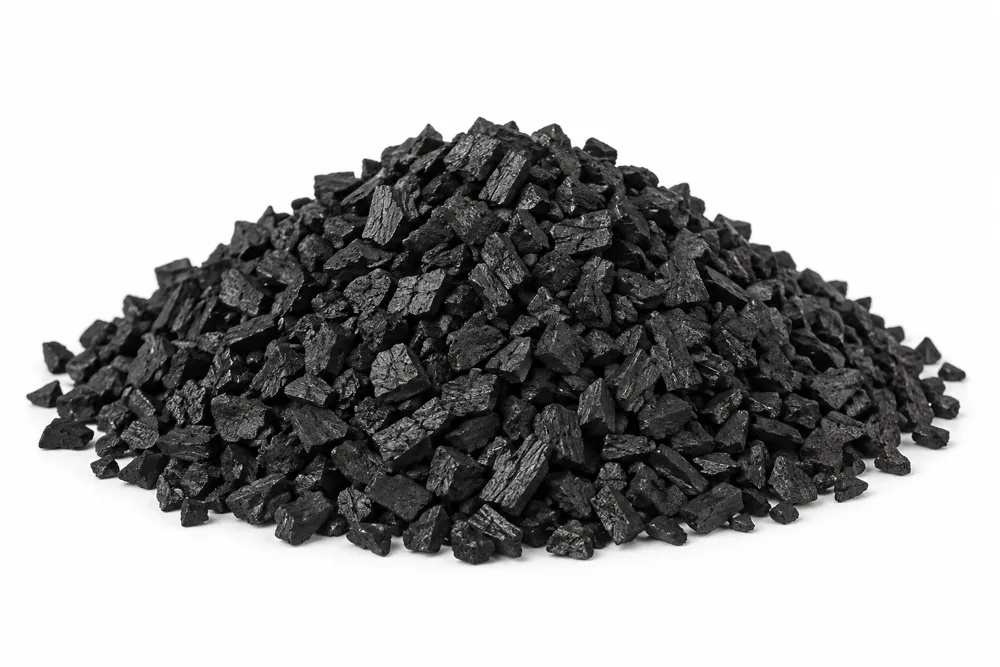
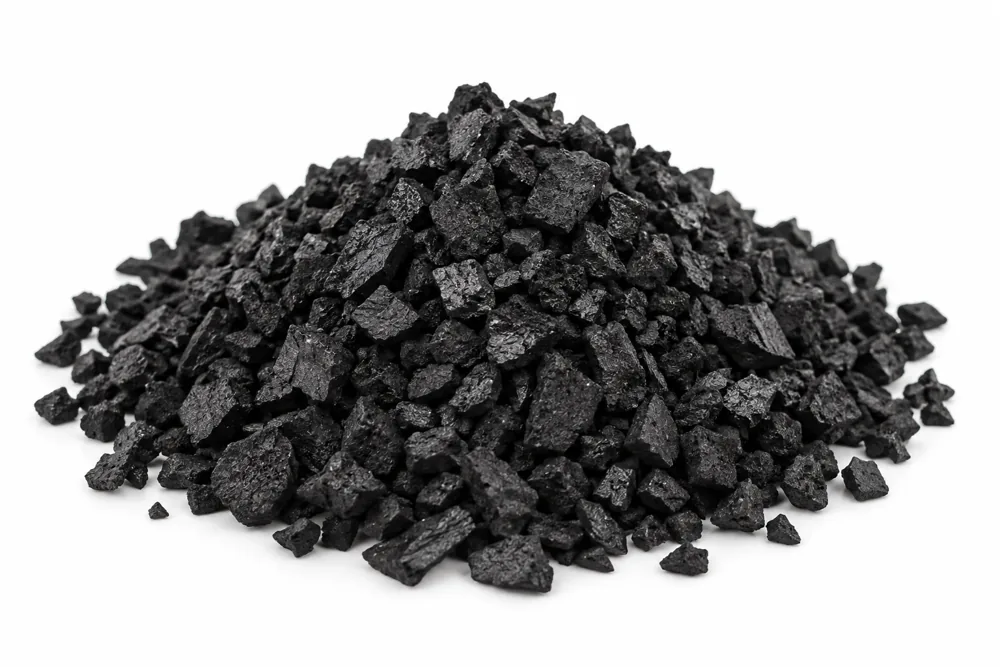
For a fixed-bed water filter, compare particle-size distribution, flow, available bed volume and pressure drop. For a gas adsorber, define the target compounds, concentration, temperature, humidity and contact time. For gold recovery, ask for the specified adsorption, attrition and handling tests. A general iodine value cannot answer all of these questions.
Browse coconut-shell carbon, coal-based carbon y carbón activado granular to prepare a grade-specific inquiry.
What to request before choosing a supplier
- A named grade and written specification. Include particle size, test methods and the limits that matter to your process.
- Technical and safety documents. Request the TDS, SDS and a representative COA. Check certificate validity and scope when your project requires a certification.
- A useful sample trial. Record the inlet conditions, carbon quantity, contact time and outlet test. Agree the acceptance criteria before evaluating results.
- A complete commercial offer. Confirm quantity, packing, origin, delivery destination, Incoterms and the proposed lead time.
- The service boundary. Identify who handles loading, change-out, spent carbon and reactivation, where these services are included.
Use the Lista de especificaciones to assemble the document request. Compare quotations against the same brief so that differences in grade, test method or service scope remain visible.
Frequently asked procurement questions
Who is the best activated carbon manufacturer?
There is no single answer for every process. Shortlist companies that offer the required grade and regional support, then compare specification compliance, trial results, documents and total delivered cost. This article does not assign an overall winner.
Is coconut-shell carbon always better than coal-based carbon?
No. The target contaminants and operating conditions determine which grade should be tested. Compare finished-grade evidence; a raw-material name alone cannot establish service life, purity or adsorption performance.
Should I buy activated carbon or a mobile filtration service?
Buying media may suit an existing vessel with an established operating team. A mobile service can include equipment, filter exchange and spent-media handling. Compare the full scope and local availability before comparing costs.
Can I request a sample before placing a bulk order?
Ask the supplier to confirm the available grade, sample quantity, documents and shipping arrangements. State what you intend to test. Trial requirements and commercial terms should be agreed for each request.
Request an ARBONYX grade comparison
Send the application, target contaminant, carbon form, particle range, trial or bulk quantity and delivery country. Include your existing grade or specification if available. ARBONYX can review the brief and discuss product options and the documents needed for your evaluation.
Sources and editorial scope
Company information checked on 13 October 2026. Supplier descriptions above link to official websites. Historical corrections are supported by Haycarb’s company information, Cabot’s NORIT divestiture announcement y Kuraray’s Calgon acquisition information. Supplier capabilities and service coverage can change; confirm them when requesting a quotation.